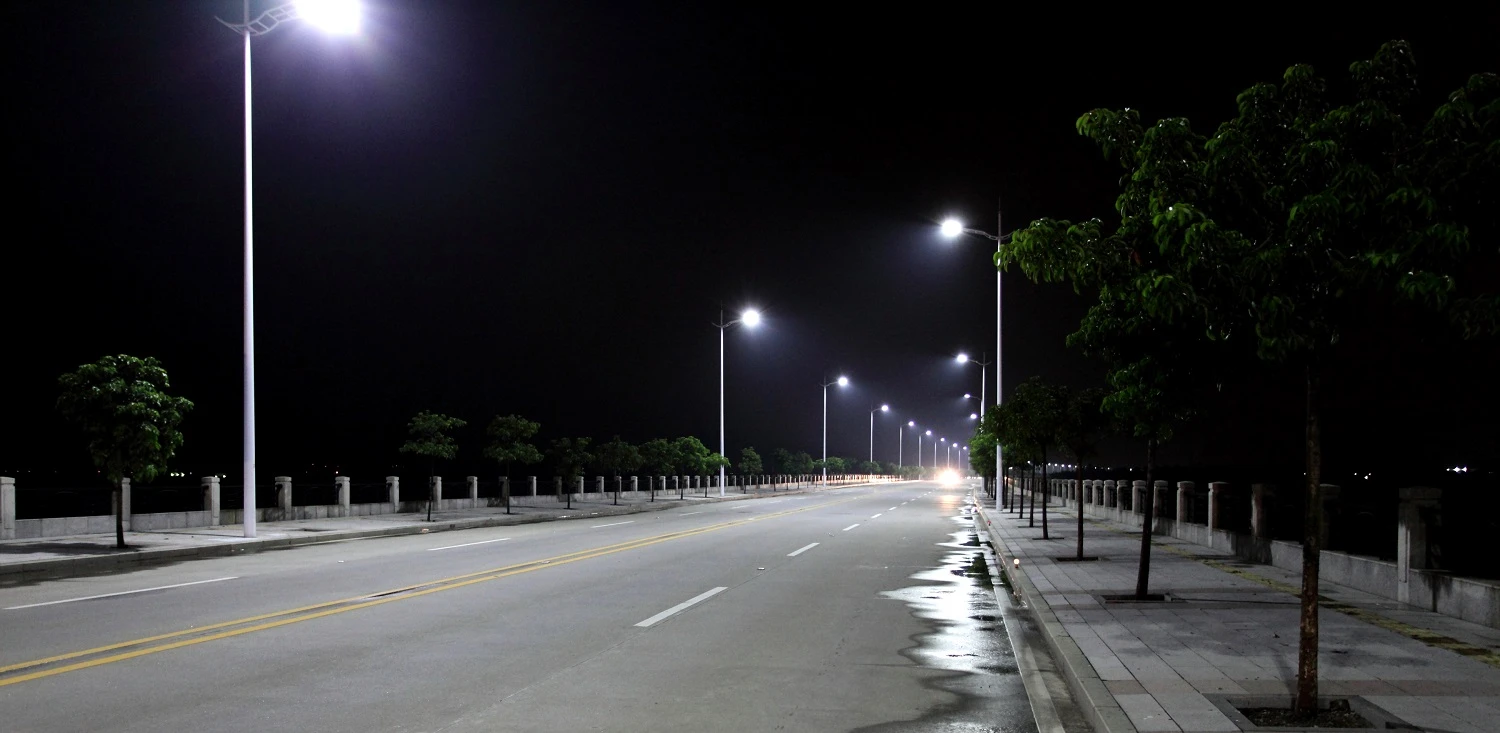
LED Street Light Is A Better Choice For Roadway Illumination
 Aug 16, 2023|
 Street lighting is a particularly critical concern for public authorities in developing countries because of its strategic importance for economic and social stability.Inefficient lighting wastes significant financial resources, and poor lighting creates unsafe conditions. So good visibility and energy-efficient LED street lights play very important role. Because of this, through the following two aspects, you can learn more about the LED street lights.
1,How do LED street lights work?
2,Why LED street lights are better?
How do LED street lights work?
LED street lights work by using light-emitting diodes (LEDs) as the source of illumination. LEDs are semiconductor devices that emit light when an electric current passes through them.
Here is a step-by-step explanation of how LED street lights work:
1. Power supply: The street light is connected to a power supply, typically an electrical grid or a solar panel system. The power supply provides the necessary voltage and current to operate the LED street light.
2. LED chips: Inside the street light, there are multiple LED chips arranged in a specific pattern. These chips are made of semiconductor materials, such as gallium arsenide or gallium nitride, which emit light when electrons recombine with electron holes. The electrical connection between these LEDs is provided by a printed wiring board, and in which the LEDs are connected. Typically the printed wiring board is made of aluminum material because it has high heat transfer features.
3. Heat sink: LED chips generate heat while emitting light. To prevent overheating and ensure the longevity of the LEDs, a heat sink is used. The heat sink is usually made of aluminum or copper and helps dissipate the heat generated by the LEDs.
4. Driver circuit: The driver circuit is responsible for regulating the electrical current and voltage supplied to the LEDs. It converts the incoming power supply to the appropriate voltage and current required by the LEDs. The LED driver secures the output current by converting the AC (alternating current) mains voltage to DC (direct current). The electrical connection comes to the LED driver secured by a fuse. This fuse is also located in the same place as the LED driver. The electrical terminal is used to connect the cables from the outside to the fuse and the LED driver.
5. Optical system: LED street lights have an optical system that helps distribute the light evenly and in the desired direction. This system may include lenses, reflectors, or diffusers to control the beam angle and reduce light pollution.
6. Control system: Many LED street lights are equipped with a control system that allows for dimming or adjusting the brightness of the lights. This control system can be programmed to automatically adjust the light output based on the time of day or other factors.
Why LED street lights are better?
LED street lights are better for several reasons:
1. Energy efficiency: LED street lights are highly energy-efficient compared to traditional street lights. They consume significantly less energy and convert a higher percentage of it into visible light, resulting in lower electricity bills and reduced carbon emissions.
2. Long lifespan: LED street lights have a longer lifespan compared to traditional lights. They can last up to 50,000 to 100,000 hours, which means fewer replacements and reduced maintenance costs.
3. Brightness and visibility: LED street lights provide better visibility and illumination on the streets. They produce a bright, white light that enhances visibility for pedestrians, cyclists, and drivers, improving safety on the roads.
4. Directional lighting: LED lights are designed to emit light in a specific direction, reducing light pollution and wastage. They can be directed to illuminate specific areas, minimizing light spillage into unwanted areas.
5. Instant on/off: LED street lights have an instant on/off feature, unlike traditional lights that take time to warm up. This allows for better control and responsiveness in adjusting lighting levels as needed.
6. Durability: LED street lights are more durable and resistant to shock, vibrations, and external impacts. They can withstand harsh weather conditions, making them suitable for outdoor use.
7. Smart lighting capabilities: LED street lights can be integrated with smart lighting systems, allowing for remote control, dimming, and scheduling. This enables efficient management of lighting levels and reduces energy wastage.
Overall, LED street lights offer numerous advantages in terms of energy efficiency, longevity,lower maintenance costs, brightness, and control, making them a better choice for street lighting.